

Miona Aleksic
19 October 2026
MicroCloud and LXD LTS releases now available
Canonical announces the latest Long Term Supported (LTS) releases for MicroCloud and LXD. Backed by up to 15 years of security maintenance, predictable operational stability, and enterprise support, these releases mark a key milestone for Canonical’s lightweight cloud infrastructure stack.
As enterprises shift toward edge and hybrid architectures, managing infrastructure without increasing complexity or costs is essential. These LTS releases address those challenges directly and deliver enhancements across multi-cluster governance, enterprise storage integrations, hardware acceleration, and automated compliance.
The MicroCloud 3.4.0 LTS release includes LXD 6.10.0 LTS, MicroCeph Tentacle, and MicroOVN 26.03, running on Ubuntu 26.04 LTS as the base.
What’s new in MicroCloud?
MicroCloud Cluster Manager
Managing multi-site clouds often introduces fragmented interfaces and administrative friction. The MicroCloud Cluster Manager addresses this issue by providing a unified web dashboard to discover, monitor, and configure all your MicroCloud clusters centrally. This capability simplifies multi-site governance, allowing operations teams to enroll new edge locations, track global cluster health, and resolve operational bottlenecks, without using separate tools. MicroCloud Cluster manager is now generally available.
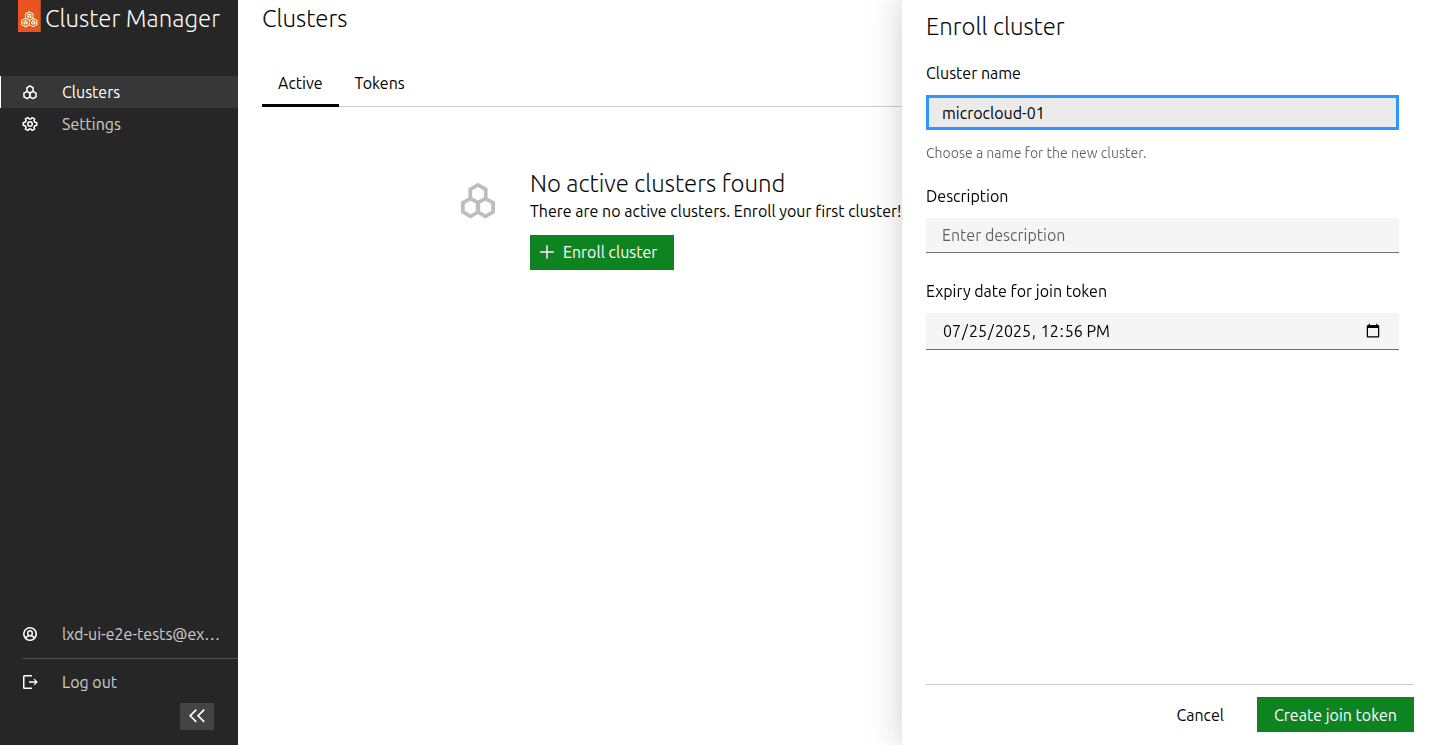
A screenshot of the MicroCloud Cluster Manager dashboard
Observability charm
Actionable telemetry is critical for maintaining uptime across distributed environments. With the new Juju charm providing integration with observability, you can automatically connect your MicroCloud nodes to the Canonical Observability Stack (COS). This integration delivers centralized log aggregation, real-time metrics, and automated alert triggering for all MicroCloud components, without requiring custom scripting.
What’s new in LXD?
Because LXD functions as the core virtualization engine inside MicroCloud, every innovation in LXD directly enhances the MicroCloud experience. Most of the new functionalities in this LTS come directly from LXD.
Disaster recovery
High availability (HA) and resilience are top priorities for enterprise infrastructure. With built-in disaster recovery via Replicators, LXD enables asynchronous replication of instances and storage volumes across separate clusters to meet recovery objectives. In addition to Replicators, team members added key improvements to the LXD recovery tool (lxd recover), which helps restore instances when using native storage replication capabilities.
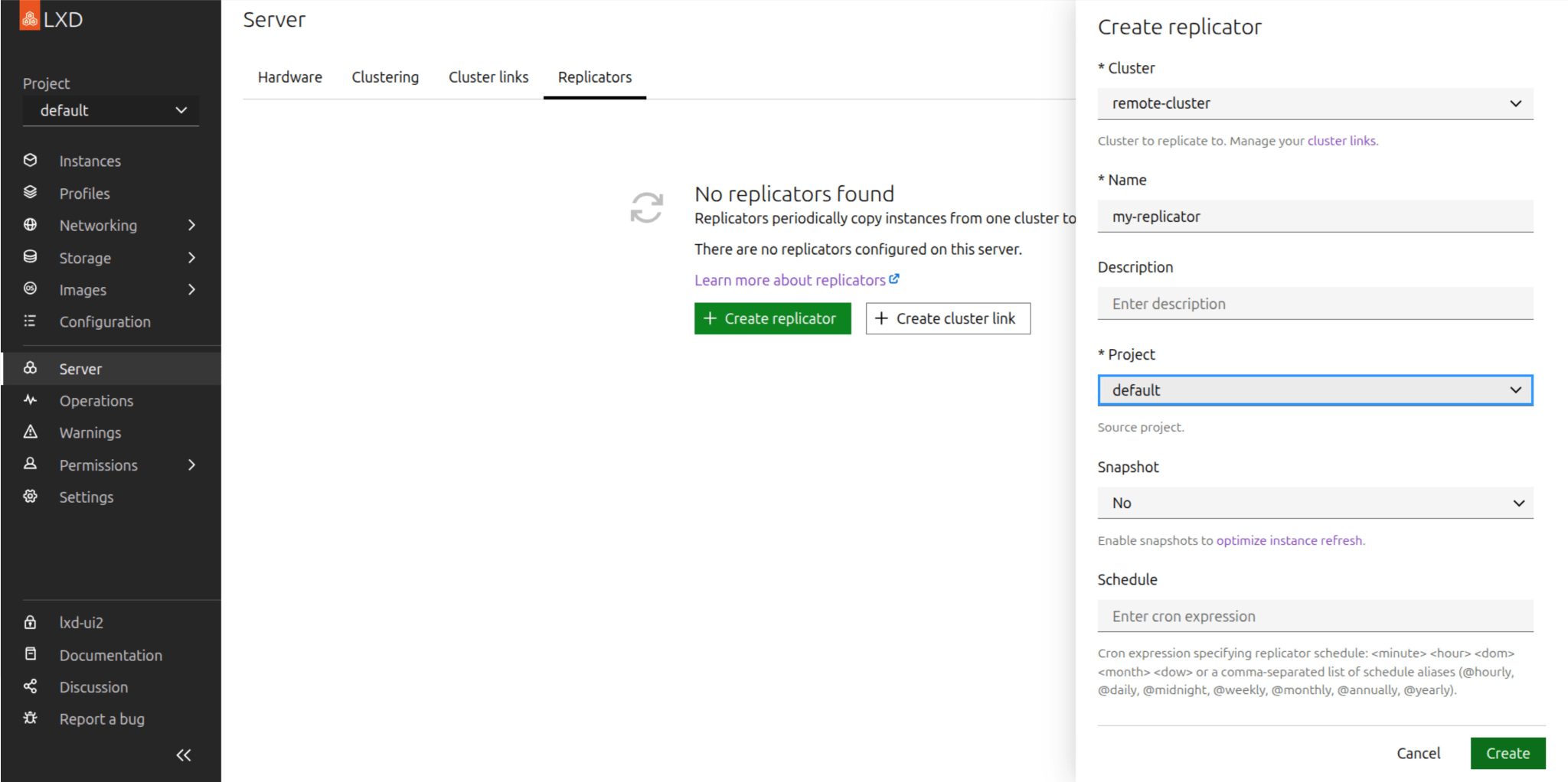
A screenshot from LXD’s User Interface (UI) creating a new project replicator
Identity and access management (IAM) and automated compliance
Enterprise security and access controls are strengthened through updated identity mechanisms. LXD features enhanced OpenID Connect (OIDC) support via server-side sessions, improving integration with enterprise identity providers such as Entra ID. LXD supports bearer token authentication, service accounts for guest instances, and granular access control for OIDC, Transport Layer Security (TLS), and bearer token identities. Additionally, Ubuntu Pro auto-attach enables LXD guest instances to inherit the host’s Ubuntu Pro subscription, unlocking security coverage and compliance frameworks across guests without administrative overhead.
Intelligent networking and load balancing
Traffic management inside virtualized environments receives a boost with multiple networking enhancements in LXD. Automatic IP allocation for OVN network forwards and load balancers removes manual static IP tracking, accelerating application deployments and preventing IP collisions. Teams can deploy internal load balancers within OVN networks, routing microservice traffic within internal boundaries. Furthermore, health-checked load balancer pools actively monitor backend instances and automatically route traffic away from degraded workloads, ensuring application availability without manual intervention.
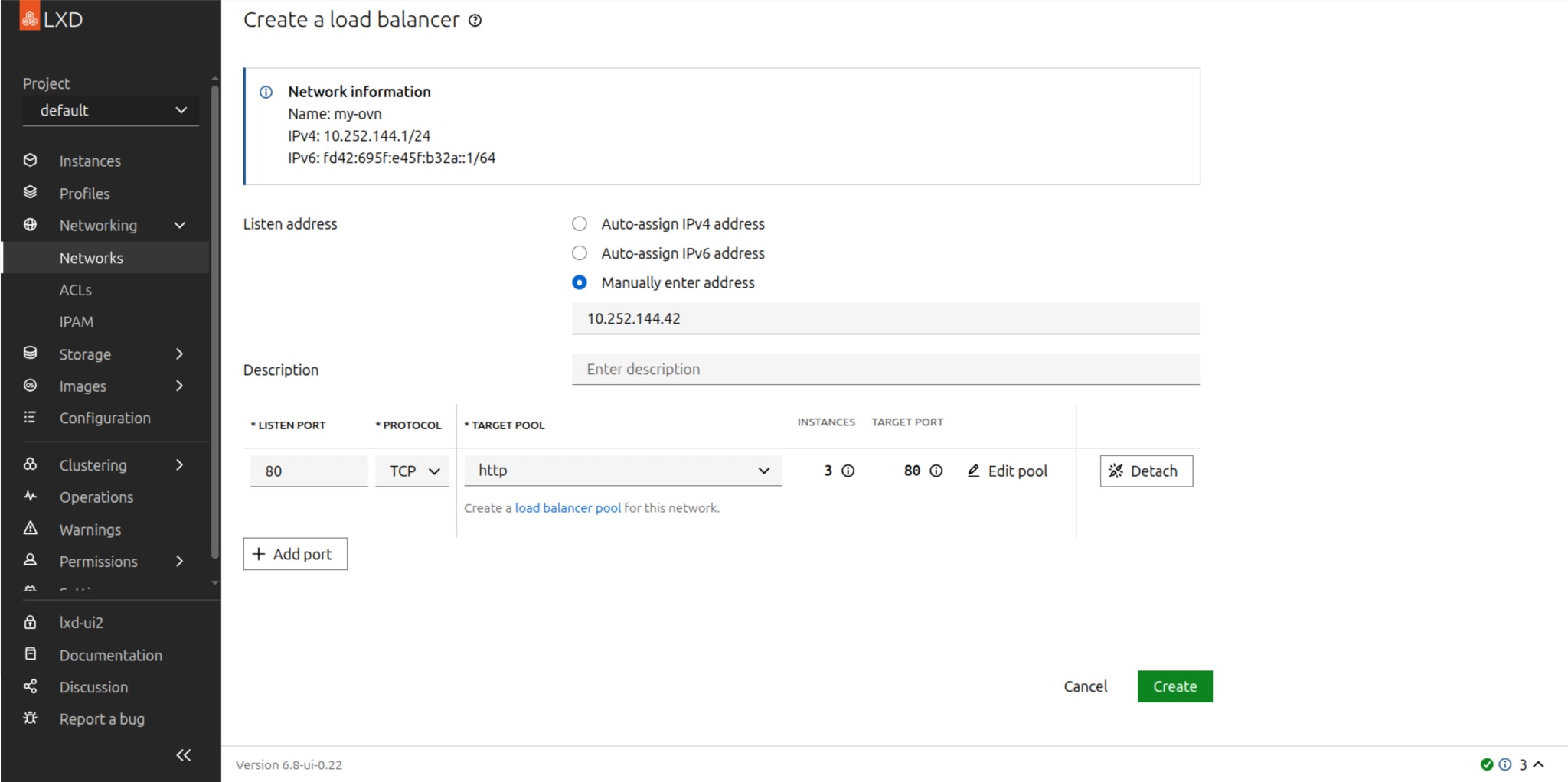
A screenshot from the LXD’s UI showing the OVN load balancer creation
Enterprise storage and Kubernetes CSI
Organizations using existing storage hardware can attach high-performance Storage Area Network (SAN) arrays directly to LXD instances. Native integrations for HPE Alletra, Pure Storage, and Dell PowerStore, complete with Fibre Channel (FC) support for PowerStore and Pure Storage, allow enterprises to maximize SAN investments while delivering block storage to lightweight instances. LXD introduces a dedicated Kubernetes CSI driver, enabling Kubernetes clusters running inside LXD to request and manage persistent volumes directly through /dev/lxd.
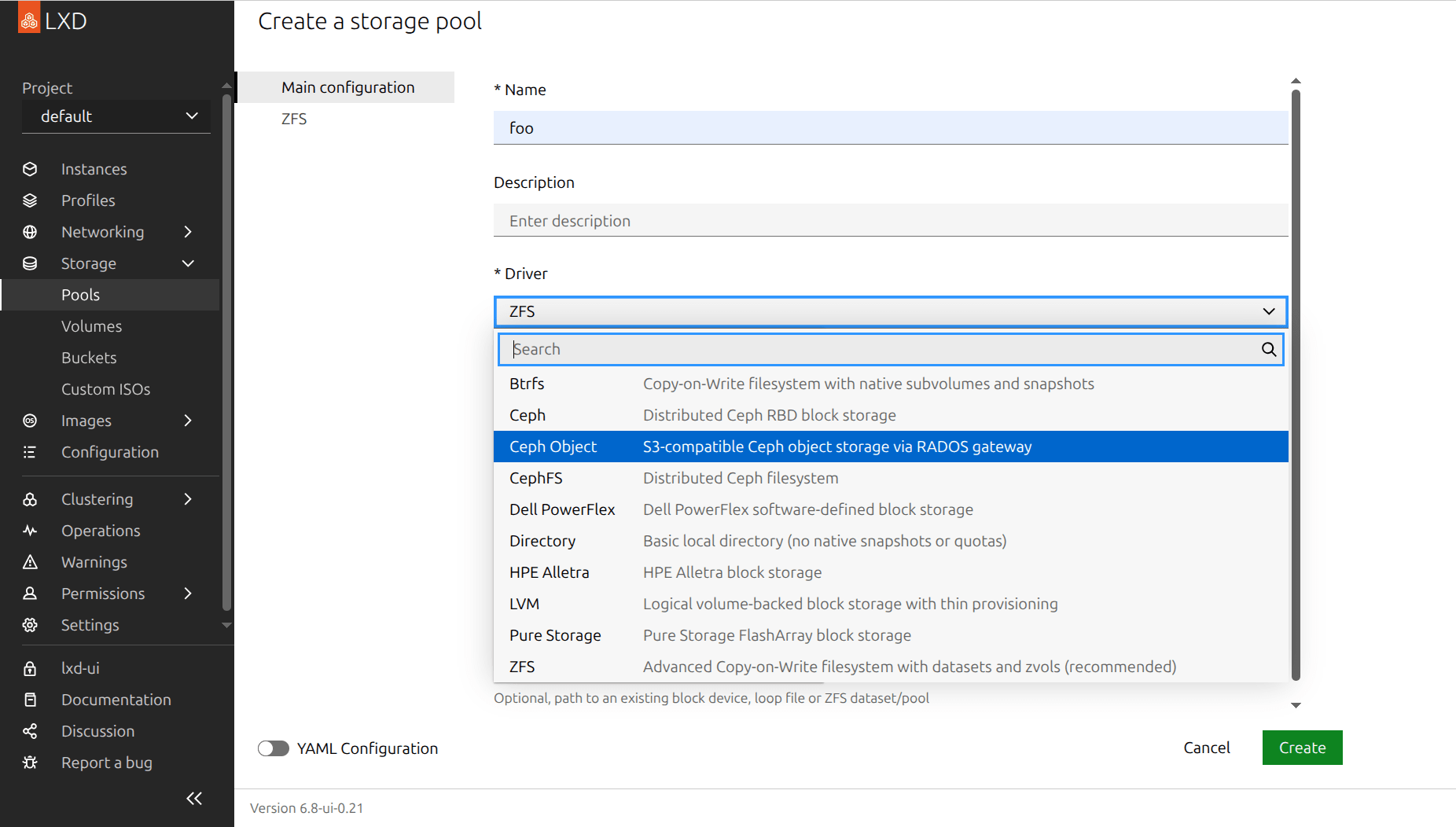
A screenshot from LXD’s UI showing the enhanced storage driver selection
NVIDIA and AMD GPU CDI
For compute-intensive AI/ML, computer vision, and edge graphics processing, LXD adopts the Container Device Interface (CDI) standard. The release delivers full CDI support for NVIDIA GPUs, enabling integrated GPU (iGPU) passthrough, alongside AMD GPU CDI support for ROCm workloads.
Server-side image registries
Historically, image remotes in LXD existed solely as client-side configuration files on individual machines. This made it difficult for web interfaces like the LXD UI to discover, manage, or share custom image sources across environments. By making image registries a native, server-side concept stored directly in the cluster database, LXD provides a unified, cluster-wide view of available image sources. This decouples image discovery from client configuration, allowing both the LXD UI and API clients to configure, inspect, and share pointers to SimpleStreams repositories or specific LXD projects across all cluster nodes, avoiding the need for manual client setup while maintaining control over image access.
Additions to the web UI
This LTS release includes additions to the web UI designed to simplify operations. The updated interface introduces workflows for disaster recovery replicators, server-side image registries, OVN load balancers, placement groups, and cluster links.
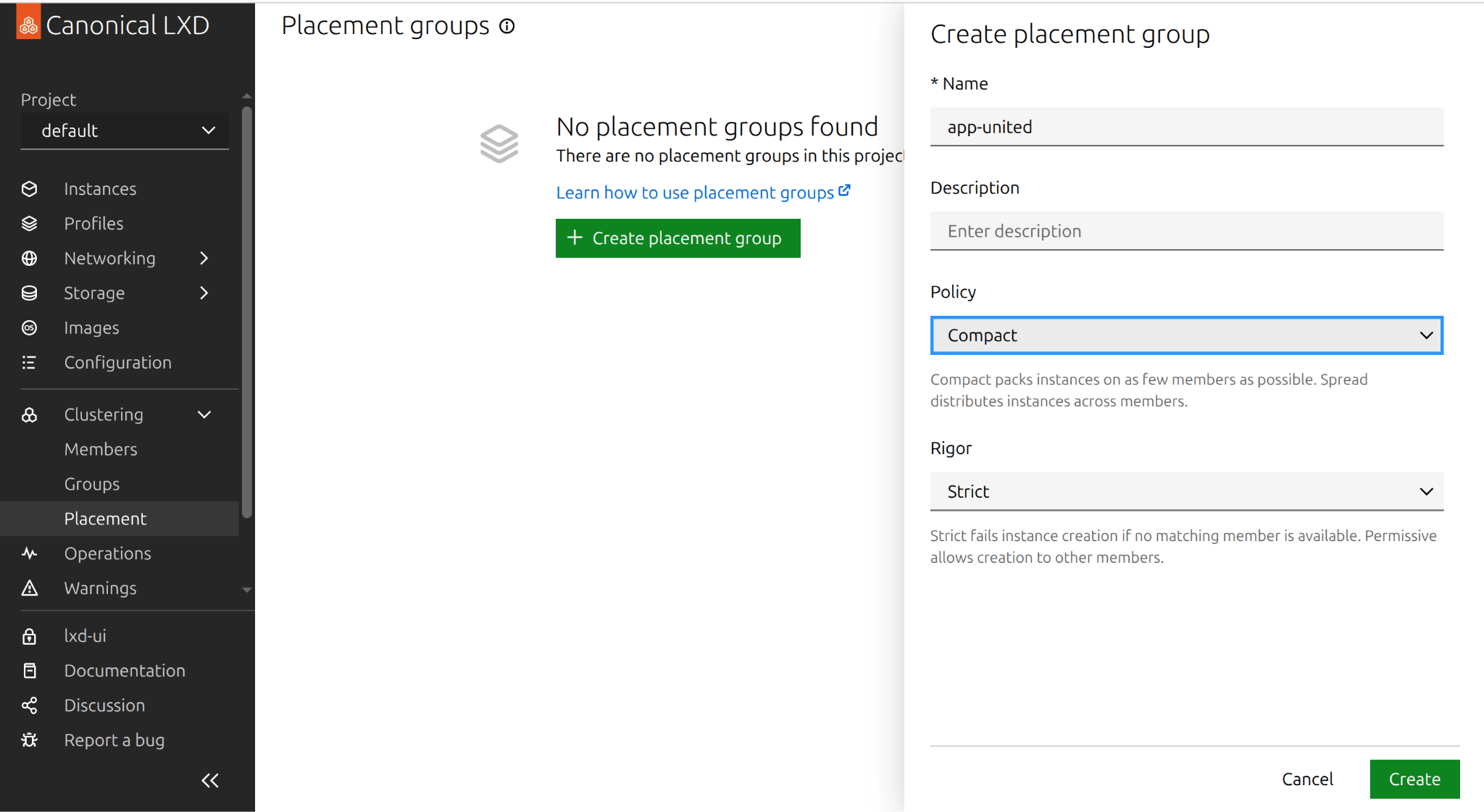
A screenshot from the LXD’s UI showing the placement group creation options
Administration is faster with an inline instance file explorer for direct file management, clipboard sync for VM guests, server-side external VM image conversion (QCOW2 and VMDK), and saved console connection preferences. The clustering section expands with additional cluster member information, graphs, and improved management options. Paired with granular project access controls, mobile responsiveness improvements, and a modern code editor for YAML configurations, the LXD UI enables administrators to manage multi-project clusters from a browser.
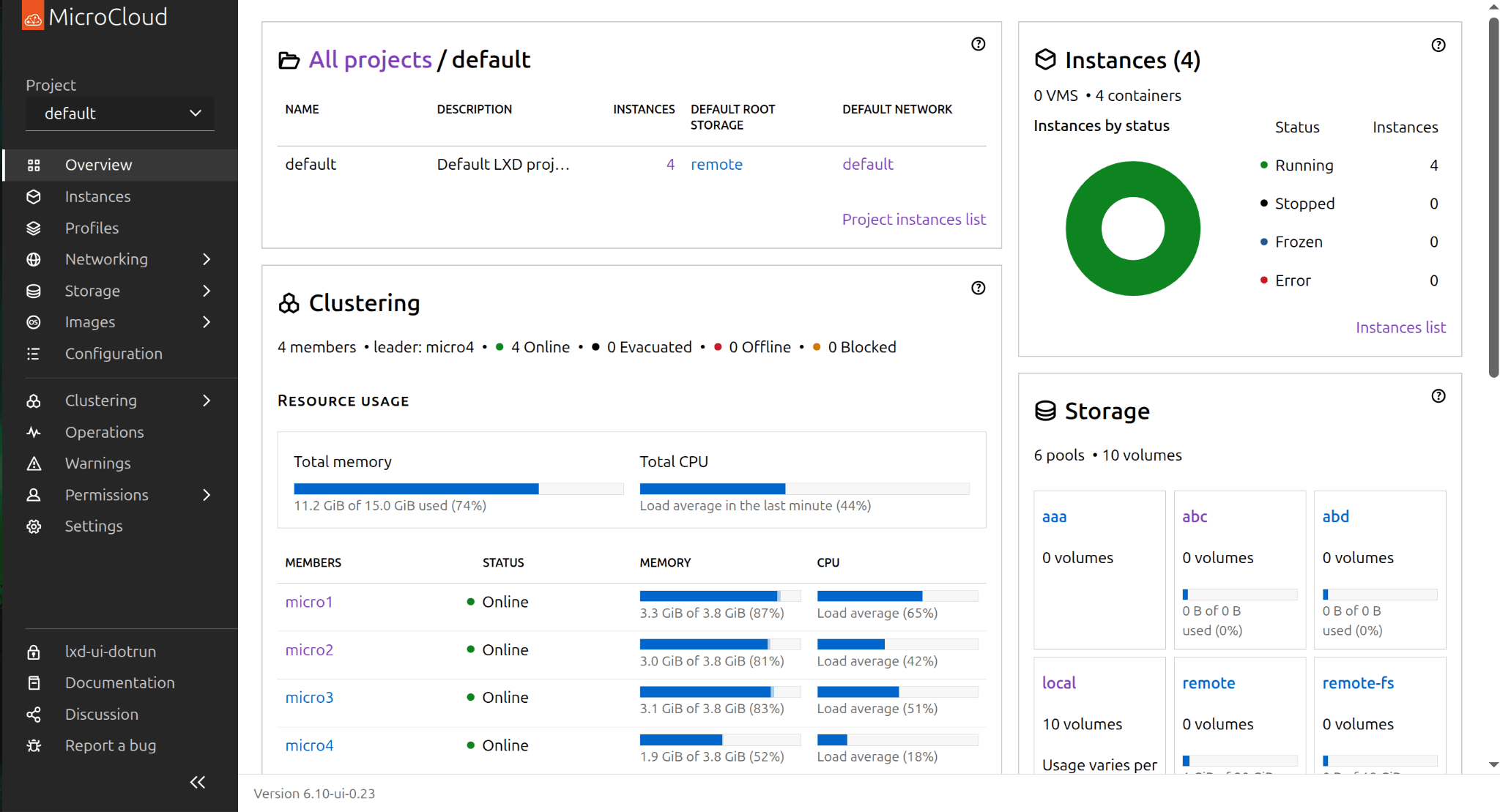
A screenshot from the MicroCloud’s UI showing the new dashboard with a clustering overview
Get started today
By pairing LXD’s lightweight open source virtualization with MicroCloud’s automated operational layer, these LTS releases deliver a clean and cost-predictable infrastructure platform. Whether consolidating workloads or building next-generation edge clusters, MicroCloud and LXD provide the agility of public cloud with the control and cost efficiency of private infrastructure. Learn more about Canonical’s open source virtualization solutions on our webpage.
- Documentation: Explore the MicroCloud Documentation and LXD Documentation
- Community & Feedback: Join the discussion on the Ubuntu Discourse
- Enterprise support: Learn how Ubuntu Pro provides full coverage for MicroCloud and LXD environments
- Join our webinar on October 29th, for more details and hands on demos


